

The Manx cat is instantly recognizable by its missing tail, a result of a genetic mutation that affects spinal development. While these cats have captivated pet owners with their distinctive appearance and loyal, dog-like personalities, this same mutation carries serious health implications that every prospective owner needs to understand before bringing one home.
The tailless feature isn’t simply cosmetic. The genetic change that produces the Manx’s signature look also disrupts normal spine and spinal cord development, leading to a condition known as Manx Syndrome. This array of problems can affect the hind legs, bladder, and colon, with manifestations ranging from an abnormal hopping gait to partial paralysis. Spina bifida, a spinal cord abnormality, is the most common developmental issue in the breed, potentially causing incontinence, painful infections, and loss of sensation in the hind limbs.
Not every Manx will experience these complications, and some cats live completely healthy lives. However, the risk is significant enough that understanding what you’re taking on matters deeply. If you’re considering a Manx or already share your home with one, knowing the warning signs and health considerations will help you provide the best possible care and make informed decisions about whether this breed aligns with your capacity to meet potential medical needs.
What Makes a Manx Cat Different
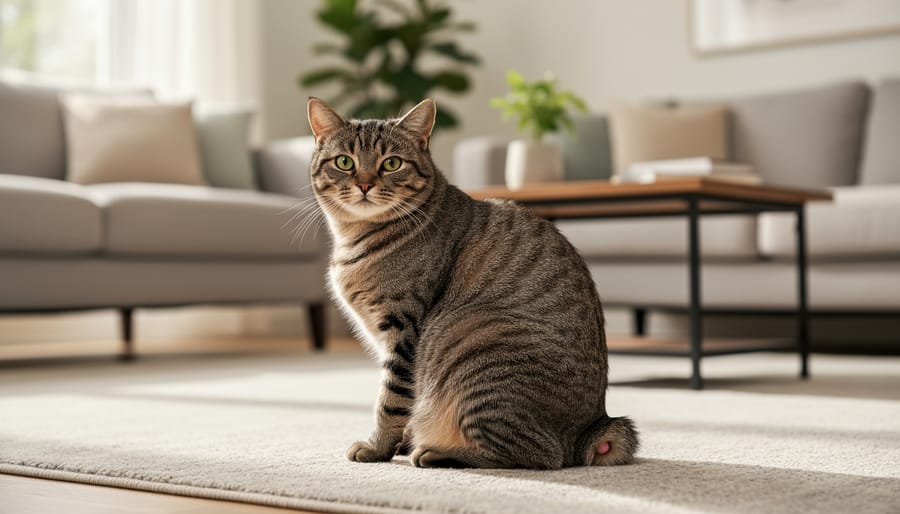
The Manx cat’s most recognizable feature, its missing or shortened tail, isn’t a quirky breed characteristic. It’s the visible result of a genetic mutation that fundamentally alters the animal’s spinal development. This mutation affects the spine’s formation from the base upward, which is why Manx cats display such a wide range of tail lengths, from completely tailless and short tails to various stub configurations.
The mutation responsible is a dominant gene, meaning a cat needs only one copy from one parent to potentially display the tailless trait. However, inheriting two copies of this gene is lethal, these kittens don’t survive to birth. This alone signals that we’re dealing with a powerful genetic force, not a harmless cosmetic variation.
What makes this mutation particularly concerning is that it doesn’t stop at tail development. The same genetic instructions that eliminate or shorten the tail also disrupt the formation of the spine and spinal cord throughout the lower back and sacral region. The spinal column may develop gaps, fuse improperly, or fail to fully protect the spinal cord. This creates the foundation for a constellation of serious health problems that many prospective owners don’t anticipate when they’re charmed by a cat’s unique appearance.
Understanding Manx Syndrome
How the Mutation Affects the Spine
The tailless gene in Manx cats doesn’t work in isolation. It’s part of a dominant mutation that affects how the entire spine forms during early development. Think of the spine and tail as a continuous structure built from the same blueprint. When the mutation shortens or eliminates the tail, it often disrupts the formation of the lower spinal vertebrae and the spinal cord they’re meant to protect.
In many Manx cats, the vertebrae in the lower back and sacral region fail to close properly around the spinal cord. This incomplete closure is spina bifida and development in action. The spinal cord, which should be safely encased in bone, remains partially exposed or compressed. Depending on the severity, this can affect the nerves controlling the hind legs, bladder, and bowels.
The same genetic instruction that removes tail vertebrae can also cause the remaining vertebrae to be malformed, fused together, or positioned incorrectly. Some cats have spinal cords that end too abruptly or taper abnormally. Others develop with sections of the cord that are pinched or kinked. These structural problems explain why Manx Syndrome symptoms vary so widely between individual cats.
What makes this particularly challenging is that you can’t predict the severity by looking at tail length alone. A completely tailless cat might have a perfectly formed spine, while a cat with a small stump could have serious spinal cord abnormalities. The mutation’s effects on internal development don’t always match what’s visible on the outside.
Common Health Problems in Manx Cats
The neurological consequences of the Manx mutation create a cascade of functional problems that significantly impact daily life. Cats with Manx Syndrome often struggle with basic abilities most cats take for granted, and these challenges typically appear within the first few months of life, though some may not become apparent until the cat matures.
Hind leg function is frequently compromised. Many affected cats develop partial paralysis that limits their mobility and coordination. Instead of normal walking, they may use a distinctive hopping gait as their hind legs can’t move independently and smoothly. Some develop a plantigrade stance, meaning they walk on their hocks rather than their toes, giving them an awkward, flat-footed appearance that signals nerve damage.
The impact on bladder and bowel control represents perhaps the most challenging aspect of Manx Syndrome. Affected cats may experience urinary incontinence, leaking urine without awareness or control. Fecal incontinence is equally common, with cats unable to sense when they need to defecate or control their bowel movements. This isn’t a behavioral issue but a genuine lack of nerve sensation and muscle control in the lower body.
These elimination problems create secondary health risks. Constant urine dribbling irritates the skin and can lead to painful burns and infections. Retained urine in a poorly functioning bladder increases the risk of urinary tract infections. Fecal soiling similarly causes skin problems and hygiene challenges that require daily management.
Some cats also experience reduced or absent sensation in their hind legs and tail area, making them unaware of injuries or unable to respond normally to touch or pain in these regions.
Recognizing the Warning Signs
Early detection of Manx Syndrome can make a significant difference in managing your cat’s health and quality of life. If you’re considering a Manx cat or already have one at home, watch for these telltale signs that something may be wrong.
The most characteristic symptom is an abnormal hopping gait where your cat moves both hind legs together like a rabbit instead of alternating them. This happens because the spinal cord abnormality affects nerve signals to the back legs, disrupting normal coordination and movement patterns.
Another red flag is plantigrade stance, where your cat walks on their hocks (the joint that looks like a backward knee) rather than on their toes as cats normally do. Instead of standing upright on their paws, affected cats lower their hind legs so the entire lower leg touches the ground. This abnormal posture indicates serious nerve damage affecting muscle control and leg sensation.
Incontinence is another common manifestation of Manx Syndrome. You might notice urine or feces leaking without your cat’s awareness, wet spots where they’ve been sitting, or a complete inability to control elimination. Some cats lose sensation in their hind legs entirely, showing no response when you gently touch or pinch their back paws.
Walking difficulty and bladder issues often appear together because the same spinal defect affects multiple nerve pathways. If your cat needs surgery to address these problems, understanding cat anesthesia risks becomes especially important given their underlying neurological condition.
Watch for signs of straining during elimination, repeated urinary tract infections, or skin irritation around the hind end from constant moisture. These secondary problems can develop quickly when the primary nerve damage prevents normal function.
Quality of Life Considerations
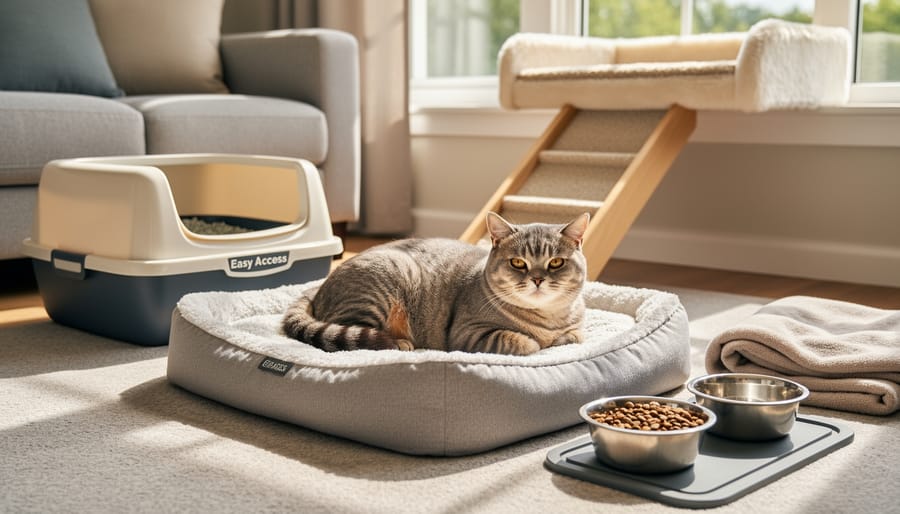
Living with a Manx cat affected by Manx Syndrome means accepting significant daily challenges that many prospective owners don’t fully anticipate. Cats with this condition may struggle to jump, climb, or use a litter box normally, behaviors that define a cat’s independence and dignity. The partial paralysis affecting hind legs can make grooming difficult, leading to matted fur and skin problems in areas the cat can’t reach.
Incontinence presents one of the most demanding realities. Affected cats may require diaper changes, frequent bathing, and constant monitoring for urinary tract infections. The skin irritation from urine contact can cause painful sores, and recurring bladder infections need ongoing veterinary management. Your home will need waterproof bedding, extra cleaning supplies, and designated areas that can handle accidents.
Pain management becomes a daily consideration. While some Manx cats experience no discomfort, others live with chronic pain from spinal abnormalities or infections. You’ll need to watch for subtle veterinarian warning signs that your cat is suffering, since cats naturally hide pain.
The emotional toll shouldn’t be underestimated either. Watching your cat struggle with basic functions takes patience, compassion, and financial resources for ongoing veterinary care. Some owners find deep fulfillment in providing this level of care, while others find it overwhelming. There’s no judgment either way, but understanding this commitment beforehand helps you make the right decision for both you and a potential Manx companion.
When to Seek Veterinary Care
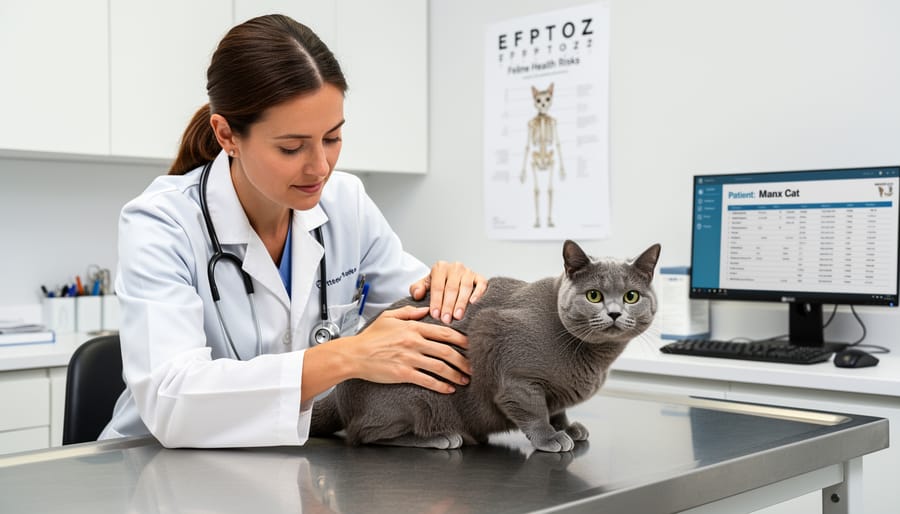
Certain symptoms in Manx cats require immediate veterinary attention. If your cat suddenly loses the ability to urinate or defecate, develops sudden hind leg paralysis, shows signs of severe pain when moving, or experiences a significant change in coordination or gait, these are veterinary emergencies. Don’t wait, seek in-person care right away.
For less urgent concerns, schedule a veterinary examination if you notice gradual changes in your cat’s mobility, subtle differences in litter box habits, or new patterns of wetness around where your cat sits or sleeps. Early detection of Manx Syndrome progression can make a significant difference in managing your cat’s comfort and quality of life.
Manx cats benefit from regular veterinary check-ups every six months rather than annually. These visits allow your vet to monitor spinal health, assess nerve function in the hind legs, and catch developing issues before they become severe. Your vet can also provide tailored advice to support immune health which is crucial for cats prone to urinary tract and skin infections from incontinence.
Between in-person visits, EyeVet’s 24/7 service can help you determine whether a symptom warrants an immediate trip to the clinic or can wait until your scheduled appointment. We’re here to answer questions and provide guidance, but remember that serious health concerns, especially those involving neurological function, bladder control, or mobility, require hands-on examination and diagnostic testing that only in-person care can provide.
Making an Informed Decision
If you’re considering bringing a Manx cat into your home, the most responsible first step is understanding what you’re truly committing to. These cats require owners who can handle potential lifelong health management, unexpected veterinary expenses, and the possibility of caring for a cat with mobility issues or incontinence. This isn’t about discouraging adoption, it’s about ensuring you’re genuinely prepared.
Before acquiring a Manx cat, ask direct questions about the cat’s health history and current function. Can the cat walk normally, or does it have a hopping gait? Are there any signs of incontinence or hind leg weakness? Has a veterinarian examined the cat’s spine and neurological function? For kittens, understand that some Manx Syndrome signs don’t appear until the cat matures, meaning you’re accepting uncertainty. Any reluctance to answer these questions or provide veterinary records should raise serious concerns.
The ethical dimension matters too. The same genetic mutation that creates the breed’s signature look causes these health problems, which raises questions about whether continuing to breed tailless cats prioritizes human preference over animal welfare. Some Manx cats live comfortable lives, but others face chronic pain and limitations. Prospective owners should consider whether they’re financially and emotionally equipped to provide the specialized care these cats may need, including accessible vet care for ongoing monitoring and treatment.
Do all Manx cats develop health problems?
Not all Manx cats develop Manx Syndrome, but the risk is significant, particularly in cats with no tail at all. Cats with partial tails tend to have fewer issues, though problems can still emerge.
What are the typical costs of owning a Manx cat with health issues?
Costs vary widely depending on the severity of problems, but expect potential expenses for specialized diagnostics, ongoing medications, bladder management supplies, and frequent veterinary visits. Some cats require lifelong supportive care.
Is adopting a Manx cat better than buying from a breeder?
Adoption gives a cat in need a home and doesn’t support continued breeding of cats with known genetic health risks. However, adopted Manx cats may come with existing health challenges that require the same commitment and preparation.
Consider your living situation honestly. Can you accommodate a cat that might need frequent litter box changes, waterproof bedding, or assistance with mobility? Are you home enough to provide the monitoring and care a special-needs cat requires? These practical realities matter as much as your affection for the breed’s appearance. Making an informed decision means prioritizing the cat’s wellbeing over the appeal of their distinctive look.
Manx cats can be affectionate, playful companions, but the decision to bring one into your home shouldn’t be made lightly. The same genetic mutation that creates their distinctive appearance carries real risks of spinal cord abnormalities, mobility issues, and chronic incontinence that can significantly impact quality of life. If you’re considering a Manx cat, talk openly with your veterinarian about what to watch for and what level of care these cats may need throughout their lives. EyeVet’s team is available 24/7 to answer your questions and provide educational support as you learn about breed-specific health concerns, but remember that any signs of Manx Syndrome require prompt, in-person veterinary evaluation and care. Making an informed choice means understanding both the joys and the genuine challenges ahead.