

Yes, you can get your pet vaccinated at home. A mobile vet service or mobile clinic brings a licensed veterinary team to your door, and the whole process usually takes about 30 to 60 minutes, from booking to the visit itself. The only real prerequisites are a few minutes to gather your pet’s records and a calm, quiet space where your animal feels comfortable.
For many Canadian pet owners, this is a welcome option. Cats who panic in carriers, dogs who tremble in waiting rooms, households with several animals, or owners with limited mobility often find that a vaccination at home removes the hardest part of the appointment. Your pet gets the same core protection against preventable illness, delivered by the same kind of trained professionals, without the car ride.
Mobile vaccination isn’t right for every situation, though. Pets that are unwell, have a history of vaccine reactions, or need a physical exam or bloodwork may be better served in a clinic, and in-person care remains the foundation of good pet health. If you’re unsure which route suits your pet, our 24/7 e-consults let you talk it through with a veterinary professional at any hour, before you book anything.
This guide walks you through what to prepare, when to choose a clinic instead, how to go from booking to visit, and how to confirm your records and plan boosters.
Is a Mobile Vet Visit Right for Your Pet’s Vaccinations?
A mobile vet visit can be a great fit for routine vaccinations, but it isn’t the right answer for every pet or every situation. Most mobile services offer core and lifestyle vaccines, a basic health check, and time to ask questions, all in your own living room. Think of it as accessible pet care that comes to you.
Some households benefit more than others:
– Anxious or fearful pets who find car rides and waiting rooms stressful, since they stay in familiar surroundings.
– Multi-pet homes, where one appointment can cover several animals.
– Busy schedules, because you skip the commute and the waiting room.
– Owners with mobility challenges, who may find loading a carrier or travelling difficult.
– Rural areas, where the nearest clinic may be a long drive away.
A clinic visit is often the better choice when your pet seems unwell, needs bloodwork or X-rays, or has a complicated health history. Clinics have diagnostic equipment and emergency support on hand that a mobile van simply can’t match.
That’s why mobile care works best as a complement to in-person veterinary exams, not a replacement. It’s well suited to healthy pets who just need their shots, while any concern beyond routine vaccination deserves a full hands-on assessment.
What to Gather Before Your Mobile Vet Arrives: Records, Supplies and Questions
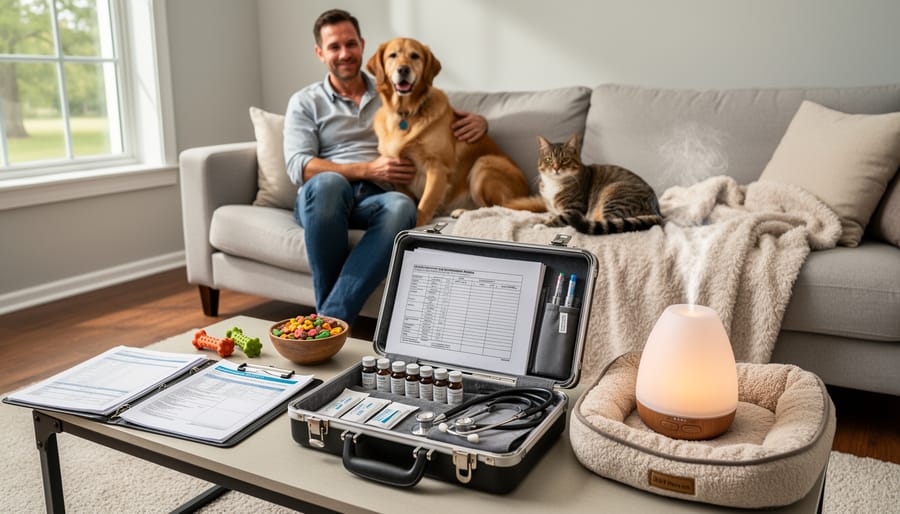
A little preparation makes a mobile visit smoother for you, your pet and the veterinarian. Most of it takes only a few minutes, and having everything within reach means the appointment can focus on your pet instead of searching for paperwork.
Here’s a simple checklist to have ready:
- Your pet’s vaccination history, including any certificates from previous clinics or shelters.
- A list of current medications, supplements and ongoing health concerns.
- A leash, carrier or towel to help your pet feel secure and comfortable.
- A handful of small, favourite treats for encouragement and reward.
- A quiet, well-lit room with a non-slip surface where your pet already feels at ease.
- A short list of questions you’d like to ask the vet.
It also helps to understand what you’re being offered. Core vaccines are the ones recommended for nearly every pet because they protect against serious, widespread diseases. For dogs, that typically includes distemper, parvovirus and rabies, and for cats it usually includes rabies and the feline distemper combination. Lifestyle vaccines, sometimes called non-core vaccines, protect against illnesses that only affect some pets, such as kennel cough for dogs that visit groomers or daycares, or feline leukemia for cats that go outdoors.
A veterinarian decides what your pet needs by weighing age, health history, daily lifestyle and the disease risks in your area. A puppy or kitten, for example, needs a series of shots, while an indoor senior cat may need a different schedule than a social, outdoor-loving dog.
If you’re unsure where your pet stands, an EyeVet online consultation can help. Our veterinary team is available 24/7 to review your pet’s vaccine schedule and help you shape your questions before booking, so you walk into the visit feeling prepared.
Safety Warnings: When to Postpone or Choose an In-Person Visit
Most pets handle routine vaccines without any trouble, and a mobile visit is a perfectly sound way to get them done. Still, there are a few situations where it’s wiser to wait or to book at a clinic, where equipment and support are close at hand.
A pet that is currently unwell is the most common reason to delay. A fever, vomiting, diarrhea, or unusual lethargy can mean the immune system is already busy, so your veterinarian may suggest holding off until your pet has recovered. If your pet reacted to a previous vaccine, whether with swelling, hives, or significant discomfort, let the vet know before booking so they can plan a more cautious approach, often in a clinic setting.
Age and life stage matter too. Very young puppies and kittens, senior pets with chronic conditions, and pregnant animals all have special considerations, and some vaccines may need adjusted timing or a different choice altogether. The same applies to pets taking medications that affect the immune system, such as corticosteroids. In these cases, a full in-person exam helps your vet decide what’s safest.
After any vaccine, it’s normal to see mild tiredness, a slightly sore spot at the injection site, or a reduced appetite for a day or so. Keep an eye on your pet for the first 24 to 48 hours, and call your vet if something seems off.
For everything short of that, such as questions about whether a mild symptom is typical or whether your pet is ready for their shot, EyeVet’s 24/7 online consultations make it easy to talk things through with a veterinary professional at any hour. Serious or worsening symptoms, though, always call for a hands-on visit.
Step-by-Step: From Booking to the Vaccination Visit
Finding and Booking a Qualified Mobile Vet
Start by confirming the person at your door is a licensed veterinarian. In Canada, veterinarians are regulated provincially, so check your provincial veterinary college’s public registry and ask for the vet’s name and licence number when you call.
Then ask exactly what is included. Some visits cover an exam and core vaccines only, while lifestyle vaccines or extras may be priced separately. Pricing is usually built from an exam fee, the cost of each vaccine, and a travel or call-out fee that can vary with distance, so ask for a full breakdown before you commit. A mobile vet who answers these questions plainly is a good sign.
Finally, check coverage. Many services only travel within a set radius, so confirm they serve your postal code and ask about availability for multi-pet households.
Here is a simple sequence to follow from first call to finished paperwork:
- Confirm your pet’s vaccine needs with your vet or an online consultation.
- Find a licensed mobile veterinarian serving your area.
- Book the visit and send previous records in advance.
- Prepare a calm, well-lit space at home.
- Expect a pre-vaccine health check before anything is given.
- Let the vet administer the vaccines.
- Discuss aftercare and the next due dates.
- Receive your pet’s updated vaccination record.
What Happens During the Appointment
Most mobile vet appointments follow a predictable rhythm, and knowing it ahead of time helps you feel calm, which your pet will pick up on.
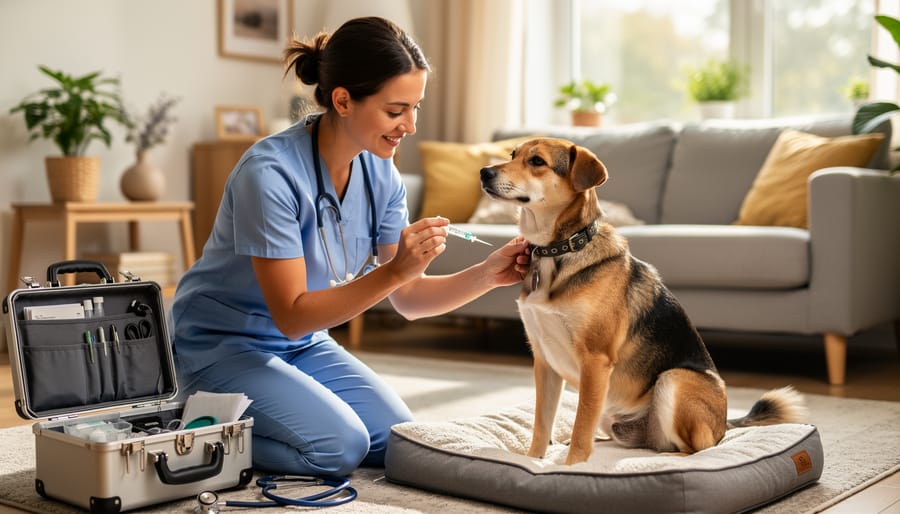
The veterinarian usually starts by greeting you and your pet, then asks a few questions. Expect them to ask about appetite, energy, any recent illness, and what your pet has been vaccinated for before. A brief health check comes next: listening to the heart and lungs, checking the eyes, ears, teeth and skin, taking temperature, and feeling the abdomen. Vaccines are only given if your pet looks well enough to receive them.
The vaccine itself takes just a few seconds. Many vets offer a treat or gentle praise beforehand as a distraction.
For nervous pets, the vet may go slowly, let your pet sniff equipment first, or use a towel wrap for cats or a soft hold for small dogs. Staying close and speaking softly helps.
Afterward, you’ll have time to ask questions, and the vet will explain what to watch for and when boosters are due.
After the Visit: Verifying Records and Planning Next Steps

Before the vet leaves, take a minute to read what’s been written down. That record becomes your pet’s proof of protection for boarding, grooming and travel, so it should be accurate from day one.
- Confirm the record lists each vaccine by name, the date given, and the lot or batch number where provided.
- Check that the veterinarian has signed or stamped the certificate.
- Photograph or scan the certificate and save it to your phone and cloud storage.
- Keep a printed copy in a folder for kennels, groomers or border crossings.
- Watch your pet’s appetite, energy and the injection site for the next 24 to 48 hours.
- Set calendar reminders for booster dates.
- Jot down any questions to raise with your vet.
Mild tiredness, a slightly sore spot or a smaller appetite for a day is common and usually passes quickly. Facial swelling, repeated vomiting, difficulty breathing or collapse need urgent in-person care, so contact an emergency clinic right away if you see any of them.
Boosters are easy to forget, so put the next date in your calendar before the appointment fades from memory. If you’d like a refresher on year-round protection, our guide on parasites & pets pairs well with vaccine planning.
Questions about mild after-effects or rescheduling a booster? EyeVet’s online consultations are available 24/7, so you can check in whenever something comes up.
Mobile Pet Vaccination FAQs
Are mobile vet vaccinations as effective as clinic ones?
Yes. The vaccines themselves are the same, and a licensed veterinarian handles and gives them using proper storage and technique. Where the vaccination happens doesn’t change how well it works.
Can puppies and kittens be vaccinated at home?
In many cases, yes. Young animals often start their vaccine series at home, though your vet may suggest a clinic visit if your pet needs a closer exam or has any health concerns.
Do indoor pets still need vaccines?
Usually, yes. Some diseases can reach indoor pets through open doors, visitors or the occasional escape, and many boarding facilities and groomers require up-to-date records anyway. Your vet can help you decide which vaccines suit your pet’s lifestyle.
How often are boosters needed?
It depends on the vaccine, your pet’s age and local risks. Some are given every year, while others are given every few years once the initial series is complete, so ask your vet to set out a schedule you can follow.
Beyond these questions, owners often wonder about pets that get nervous around strangers. If your dog or cat is anxious, let the mobile vet know when you book. Many teams plan a slower, calmer visit, and familiar surroundings can help a great deal. A treat, a favourite blanket and a quiet room all make a difference.
People also ask whether an online consultation can stand in for the visit. It can’t, because a vaccine has to be given in person by a veterinarian. What a 24/7 online consultation can do is help you understand your pet’s schedule, prepare questions and sort out timing before you book. It’s a handy planning tool, not a replacement for the appointment.
Finally, you should always receive an official vaccination record after the visit. Check that it lists the vaccine names, dates and your vet’s details, and keep a copy handy for boarding or travel. Vaccines are only one piece of routine care, and it’s worth learning how to protect against parasites alongside your pet’s regular shots.
Getting your pet vaccinated at home can take much of the stress out of a routine task. With a licensed mobile vet, your pet stays in familiar surroundings, and you skip the car ride and the waiting room. The key is planning: gather your records, understand which vaccines your pet needs, and know when a clinic visit is the safer choice.
After the appointment, check that the paperwork is accurate, keep a copy where you can find it, and set reminders for boosters. Keep an eye on your pet for a day or two, too.
EyeVet’s 24/7 online consultations can help you prepare, answer questions before and after the visit, and sort out scheduling. For anything serious, an in-person vet is still the right call. With a little preparation, mobile pet vaccinations can be calm and simple for you both.