

Remove all traces of pet presence before each showing by vacuuming fur from furniture, washing pet bedding, and storing toys, bowls, and litter boxes completely out of sight. Deep-clean carpets, upholstery, and hard floors with enzyme-based cleaners specifically designed to neutralize pet odors rather than mask them—buyers notice lingering smells immediately. If you need to sell exceptionally quickly, consider working with Property Saviour or similar cash buyers who purchase homes as-is, eliminating the pressure to achieve show-home perfection. Create a temporary pet relocation plan during showings and open houses, whether coordinating with friends, family, or doggy daycare, as potential buyers feel more comfortable exploring freely without animals present. Address visible pet damage proactively by repairing scratched doors, replacing stained carpets in high-traffic areas, and repainting walls with neutral colors to cover marks and nose prints. Professional staging helps redirect attention from pet-worn spaces to your home’s best features while maintaining a fresh, welcoming environment that appeals to both pet owners and non-pet owners alike.
Why Pet Owners Worry About Selling (And Why You Shouldn’t)
If you’re a pet owner preparing to sell your home, you’re likely feeling some anxiety about how your furry family members might impact the process. These concerns are completely valid and more common than you might think. Most pet owners worry about three main issues: lingering odors that have become invisible to their own noses, visible damage like scratched floors or chewed baseboards, and the reality that some potential buyers may have pet allergies or simply prefer pet-free homes.
Here’s the reassuring truth: these challenges are entirely manageable, and homes with pets sell successfully every single day across Canada. The key difference between a quick sale and a prolonged listing isn’t whether you have pets, but rather how proactively you address pet-related concerns before putting your home on the market.
Real estate professionals report that well-maintained homes with pets often sell just as quickly as those without animals. The secret lies in taking deliberate steps to minimize evidence of pet occupancy during showings while ensuring your pets remain comfortable throughout the process. Many buyers are pet owners themselves and understand that a few minor imperfections don’t define a home’s value.
It’s also important to remember that you’re not choosing between your pet’s wellbeing and a successful sale. With proper planning, you can protect both your timeline and your pet’s routine. The strategies we’ll explore address the practical realities of selling with pets while maintaining the standards of care your animals deserve. You don’t need to rehome your beloved companion or feel apologetic about being a pet owner—you simply need an effective action plan.
Pre-Listing Prep: Getting Your Home Show-Ready With Pets
Deep Clean Every Surface (Yes, Even That One)
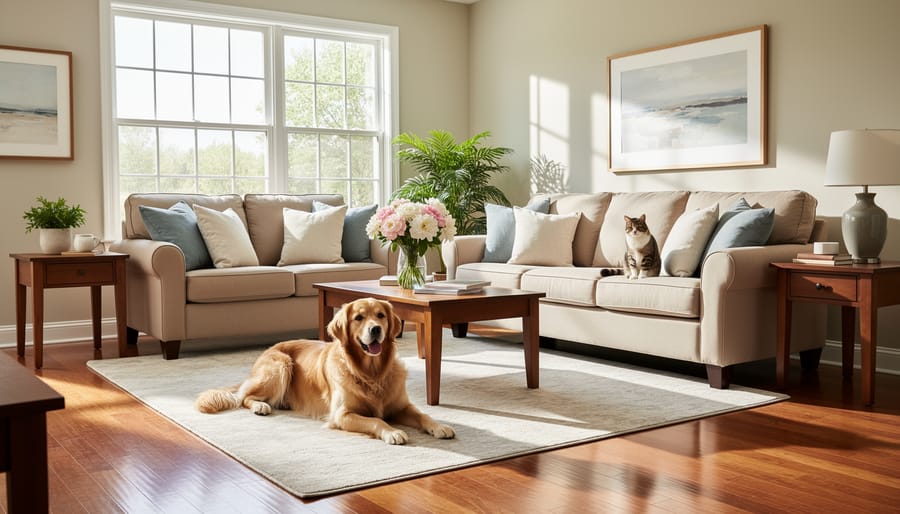
When preparing your home for sale, pet owners need to go beyond basic vacuuming. Start with floors—hardwood and tile can trap odors in grout lines and scratches. Steam clean these surfaces or use an enzymatic cleaner designed specifically for pet accidents. For carpets, consider renting a professional-grade steam cleaner or hiring specialists who can extract deeply embedded pet hair and dander that regular vacuums miss.
Walls require attention too, especially at pet height. Dogs and cats leave oils from their fur on baseboards and lower wall sections. Wipe down all baseboards, door frames, and the lower third of walls with a pet-safe cleaning solution. Check for scratch marks or nose prints on windows and sliding glass doors.
Furniture presents a challenge—even if your pets don’t usually climb on sofas, their fur travels. Vacuum upholstered furniture thoroughly, including underneath cushions. For persistent odors, sprinkle baking soda on fabric surfaces, let it sit for several hours, then vacuum. Professional grooming services before showings can significantly reduce shedding.
Don’t overlook hidden spots: air vents collect pet hair and circulate odors throughout your home. Remove vent covers and vacuum inside ducts. Clean ceiling fan blades, curtains, and lampshades where hair accumulates. Regular grooming throughout the selling process minimizes ongoing cleaning needs.
For DIY cleaning, enzymatic cleaners work best on organic pet odors. However, if your budget allows, professional deep cleaning services before listing can provide potential buyers with that crucial positive first impression.
Address Minor Repairs and Pet-Related Damage
Before listing your home, conduct a thorough walk-through to identify pet-related wear and tear that could deter potential buyers. Start with flooring—scratched hardwood can often be buffed out or touched up with matching stain pens, while deeper gouges may require professional refinishing in high-traffic areas. Examine baseboards for chew marks, which can be filled with wood filler, sanded smooth, and repainted for a fresh appearance.
Check doors and frames for scratch marks, especially near entry points where pets typically wait. A coat of paint can work wonders here. In your yard, fill any holes your dog may have dug and reseed bare patches in the lawn. Remove waste stations and consider temporarily relocating outdoor pet items during showings.
Prioritize repairs that buyers will immediately notice—entryway damage, visible floor scratches, and yard issues top the list. Minor imperfections in less-visible areas can often wait. If you’re unsure about tackling repairs yourself, consult with your real estate agent about cost-effective solutions. Many simple fixes take just a weekend and minimal investment but significantly improve your home’s appeal. Remember, addressing these issues proactively demonstrates that you’ve maintained your property well, reassuring buyers about the home’s overall condition.
Manage Pet Odors at the Source
Surface cleaning addresses immediate concerns, but truly eliminating pet odors requires tackling the root causes. Start with professional carpet steam cleaning or enzymatic treatments that break down organic compounds trapped deep in fibers—regular vacuuming alone won’t remove these embedded odors. If carpets are severely affected, replacing them before listing may be your best investment.
Your HVAC system circulates air throughout your home, so change filters monthly during the selling process and consider having ducts professionally cleaned. Pet dander and hair accumulate in these systems, spreading odors you may no longer notice but potential buyers will immediately detect.
High-quality air purifiers with HEPA filters can significantly improve air quality in main living areas and rooms where your pets spend most time. Run them continuously, especially before showings.
Address the underlying causes by maintaining litter boxes meticulously, washing pet bedding weekly, and checking for accidents in hidden areas like behind furniture or in basements. Even old urine stains can reactivate with humidity.
When odors persist despite your efforts, professional odor remediation services use industrial-grade equipment and treatments beyond typical household products. This investment often pays for itself by preventing price reductions or extended market time. If you’re unsure whether professional help is needed, ask trusted friends to provide honest feedback about any lingering scents.
The Showing Strategy: Where Does Your Pet Go?
Create a Showing-Day Routine
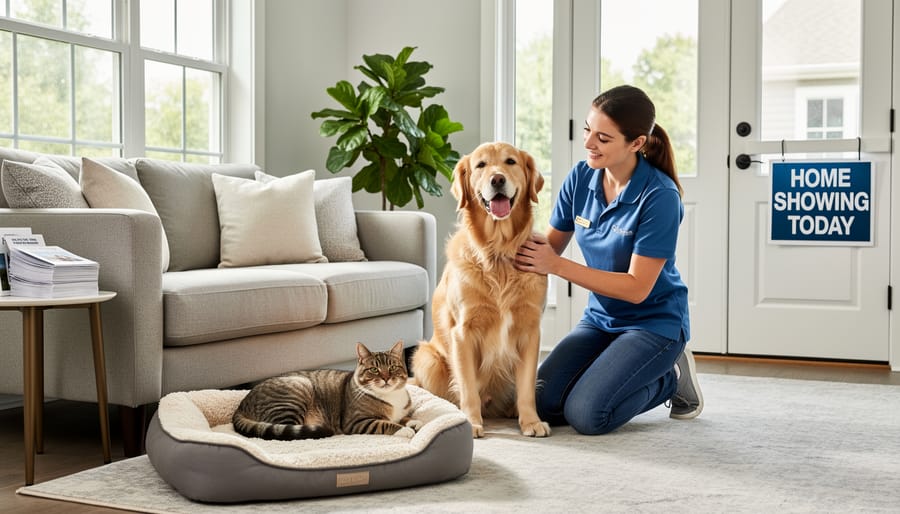
Establishing a predictable showing-day routine helps reduce anxiety for both you and your pets during the selling process. Start by creating a go-to checklist that you can execute quickly, whether you have 15 minutes’ notice or a scheduled appointment. This should include putting away food and water bowls, securing pet toys in a designated bin, and doing a final lint-roll of furniture.
Designate a comfortable “showing-day location” for your pets—this might be a trusted friend’s home, a favorite doggy daycare, or even a climate-controlled vehicle for brief showings. Keep a pet emergency kit ready with essentials like waste bags, treats, favorite toys, and any medications your pet needs. This preparation ensures you’re never scrambling at the last minute.
For pets experiencing stress during this transition period, watch for signs like excessive panting, hiding, or changes in appetite. If your pet seems particularly anxious about the disrupted routine, don’t hesitate to reach out for professional guidance. Maintaining consistency in feeding times, walks, and play sessions—even amid the chaos of selling—helps your pet feel secure and demonstrates to potential buyers that you’re a responsible, organized homeowner.
Safe Temporary Spaces for Your Pet
When scheduling home showings, you’ll need safe alternatives to keep your pets comfortable and stress-free. Doggy daycare facilities offer supervised play and socialization, making them ideal for longer showing periods or open houses. If your pet is social and enjoys other animals, this option provides exercise and entertainment while prospective buyers tour your home.
Trusted friends or family members can provide a familiar, comfortable environment for pets who may feel anxious in new settings. This works particularly well for cats or seniors who prefer quiet, predictable spaces. For shorter showings lasting 30-60 minutes, a scenic car ride can be an excellent solution—many dogs find car trips calming, and it keeps them nearby if showing times change unexpectedly.
Pet-friendly cafés with outdoor patios offer another option for well-socialized dogs, combining a pleasant outing with practical timing. Some Canadian communities even have dedicated pet boutiques where your companion can browse (and sample treats) during brief appointments.
Crating is appropriate for short periods when your pet is crate-trained and views their crate as a safe den. However, avoid using crates for extended showings or if your pet experiences crate anxiety. Always ensure fresh water is available and the temperature is comfortable, regardless of which option you choose.
Quick Pre-Showing Checklist
When you receive last-minute notice of a showing, having a quick 15-minute routine can make all the difference. Start by gathering all pet bowls, food containers, and water dishes from every room and storing them in a closed cabinet or pantry. Next, collect visible pet toys, beds, and blankets, placing them in a designated bin that you can quickly stash in your vehicle or garage. If you have cats, immediately remove litter boxes to your car trunk or a secure outdoor shed—this is non-negotiable as litter odors can be deal-breakers for potential buyers.
Do a rapid visual sweep of all rooms where your pets spend time, checking for fur on furniture and any accidents or stains you might have missed. Keep lint rollers and pet-safe cleaning wipes easily accessible for quick touch-ups. Open windows for a few minutes if weather permits to encourage fresh air circulation, then do a final walk-through from the front door perspective, ensuring no pet evidence remains visible.
Keep a pre-packed “showing bag” near your exit with treats, leashes, and comfort items so you can quickly gather your pets and leave. This routine becomes faster with practice and significantly reduces the stress of accommodating unexpected viewings while ensuring your home presents in its best light.
Making Your Outdoor Spaces Buyer-Friendly
Your outdoor spaces often tell the first part of your home’s story, and when you’re a pet owner, ensuring these areas look their best requires some focused attention. Prospective buyers will notice pet-related wear immediately, but with the right preparation, you can transform your yard into an asset that enhances your sale.
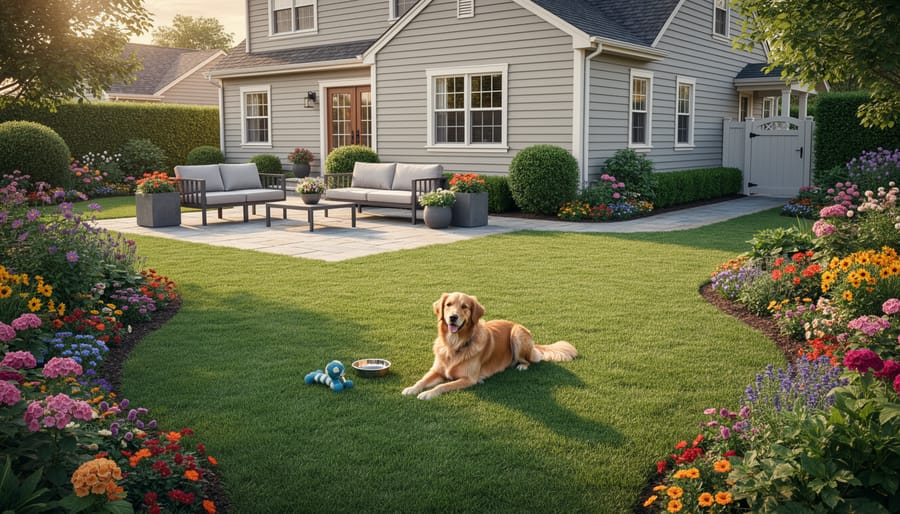
Start with thorough waste removal—this is non-negotiable. Walk your entire property daily during the selling process, checking along fence lines, garden beds, and hidden corners where waste might accumulate. Consider hiring a professional pooper-scooper service for a deep clean before your first showing, as they’ll catch what you might miss.
Address lawn damage strategically. Brown spots from pet urine can be reseeded or patched with sod for quick results. For larger damaged areas, consult a landscaping professional about rapid restoration options. In Canadian climates, timing matters—spring and early fall offer the best conditions for grass recovery. If complete lawn repair isn’t feasible before listing, ensure the yard is immaculately mowed and edged to minimize the appearance of problem areas.
Inspect your fencing carefully. Repair any loose boards, holes underneath, or compromised sections that suggest containment challenges. Even if buyers don’t have pets currently, damaged fencing raises concerns about property maintenance overall.
Remove visible pet infrastructure when possible. Put away outdoor kennels, tie-out stakes, and portable fencing during showings. If you have a dog run, consider whether dismantling it temporarily might improve your yard’s visual appeal. Keep pet toys, bowls, and bedding stored out of sight.
Finally, ensure your outdoor spaces smell fresh. Hose down concrete areas, clean deck surfaces, and consider applying pet-safe enzyme treatments to soil in high-traffic pet areas. A well-maintained outdoor space demonstrates pride of ownership and helps buyers envision enjoying the yard themselves.
When Pet Presence Actually Helps Your Sale
While it’s true that pets can present challenges during a home sale, they can also be a genuine asset in the right circumstances. Nearly 60% of Canadian households include at least one pet, which means a significant portion of potential buyers are actively seeking pet-friendly properties.
When buyers who own pets view your home, seeing pet-related features already in place—like a fenced yard, built-in feeding station, or mudroom with a washing station—demonstrates that the space works beautifully for pet owners. These features become selling points rather than concerns. Your well-maintained home proves that pet ownership and property care aren’t mutually exclusive.
A lived-in home with tasteful pet accessories can also create an emotional connection. Buyers envision their own family, including their furry companions, thriving in the space. This is particularly effective in family-oriented neighborhoods where pet ownership is the norm.
Consider leaving subtle signs of pet presence during showings—a neat pet bed in the corner, a stylish food bowl mat, or a well-organized pet supply area. These touches showcase the home’s functionality while appealing to like-minded buyers who value pet-friendly living spaces. The key is demonstrating that your home accommodates pets gracefully, making it the perfect fit for buyers with similar lifestyles.
Your Pet’s Health During the Moving Process
The stress of selling your home and moving can significantly impact your pet’s wellbeing. Dogs and cats may exhibit behavioral changes, digestive upset, or loss of appetite during this transitional period. If you notice unusual signs of stress such as excessive hiding, aggression, or changes in eating habits, professional guidance can help.
EyeVet’s team of experienced veterinarians is available 24/7 to provide expert advice when you’re concerned about how your pet is handling the moving process. Our accessible virtual consultations allow you to discuss stress-related concerns without adding another trip to your busy schedule. We can help you determine whether your pet’s symptoms require in-person attention or if they can be managed with environmental adjustments and behavioral support.
Remember, maintaining your pet’s health during this stressful time is essential for both their comfort and a successful home sale.
Selling your home quickly while caring for pets is entirely achievable with thoughtful preparation and proactive planning. Your pets are cherished family members, and their comfort and well-being matter throughout this transition. By addressing common concerns like odors, visible damage, and showing logistics before listing, you create an environment that appeals to buyers while minimizing stress for your animals. Remember that most challenges pet owners face during home sales have straightforward solutions—from deep cleaning and minor repairs to establishing temporary routines during showings. The key is tackling these elements systematically rather than feeling overwhelmed. With proper preparation, transparent communication with your real estate agent, and a solid plan for managing your pets during the selling process, you can achieve a swift sale without compromising your furry companions’ needs. Taking these steps demonstrates respect for both potential buyers and your beloved pets, setting you up for success in your home-selling journey.